


Choosing the right CRM can have a major impact on how efficiently your team sells, markets, and supports customers. Salesforce and HubSpot are often considered the top two CRM platforms, but deciding between them isn’t always straightforward. In this guide, we compare Salesforce and HubSpot side by side to help you determine which CRM actually makes sense for your business stage and growth goals.
A Quick Overview: HubSpot vs Salesforce
HubSpot is a highly user-friendly CRM platform that’s well-suited for startups and small to mid-sized businesses. It’s designed as an all-in-one CRM, making it easy for teams to manage sales, marketing, and customer support from a single system. HubSpot is easy to adopt and requires little technical expertise, allowing teams to get up and running fast without a steep learning curve.
Salesforce is a powerful and highly capable CRM platform built for larger teams as well as enterprise organizations. Because of its depth and complexity, Salesforce can be challenging to set up and, in most cases, requires assistance from a consultant or dedicated administrator. Despite the complexity, Salesforce remains one of the most robust CRM platforms available, with functionality that spans sales, customer service, analytics, and e-commerce.
HubSpot – All-in-One, Simple and Easy to Use
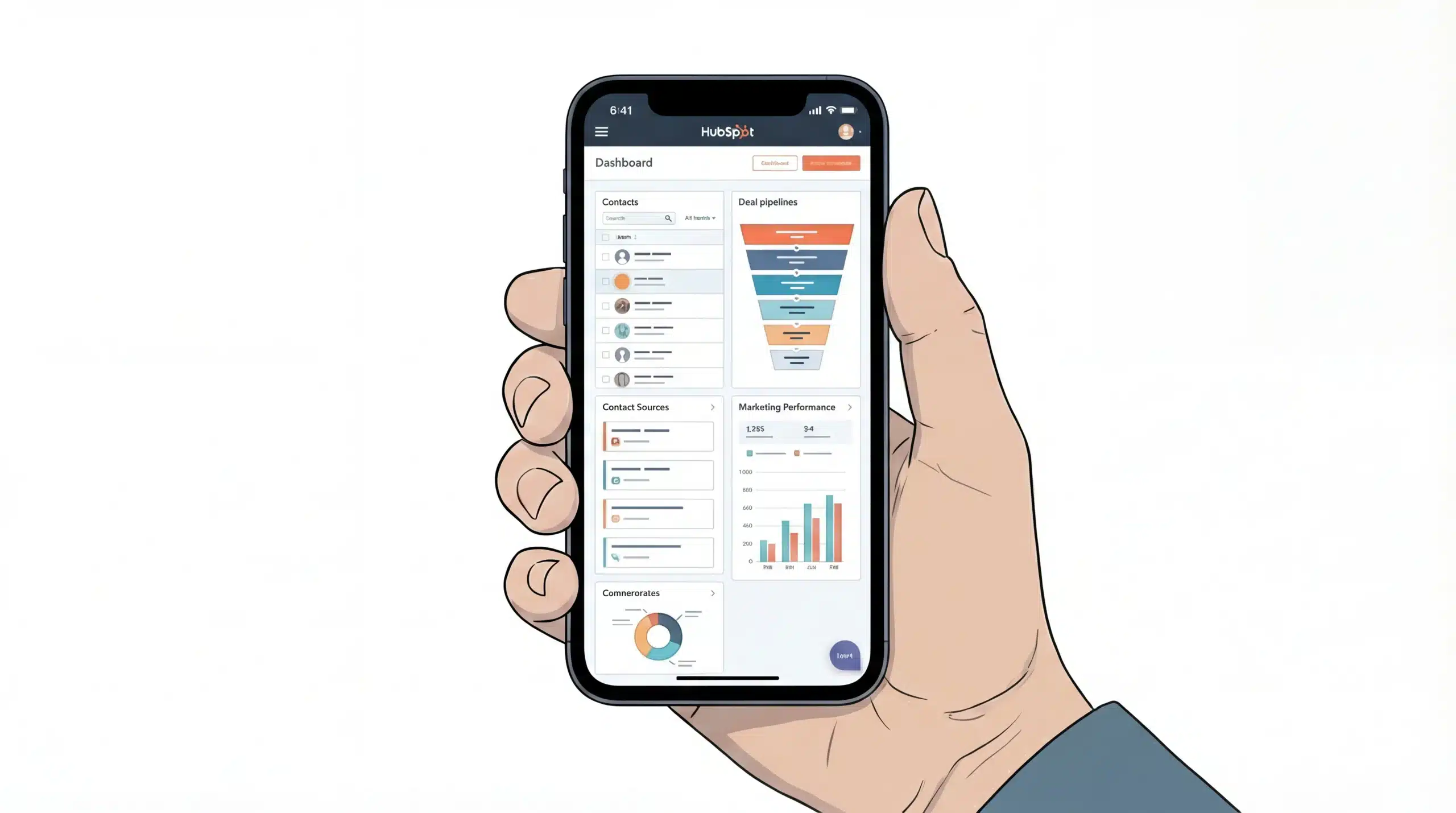
HubSpot is a simple, all-in-one CRM platform tailored for startups and small to mid-sized businesses. Unifying sales, marketing, and customer support, it allows teams to get up and running quickly without unnecessary complexity.
HubSpot Notable Features
- Contact & Deal Management: Organize leads, contacts, and deals in a clear pipeline with full activity tracking.
- Email Tracking & Notifications: See when emails are opened or clicked and follow up at the right time.
- Sales Automation: Automate follow-ups, task assignments, and lead routing to save time.
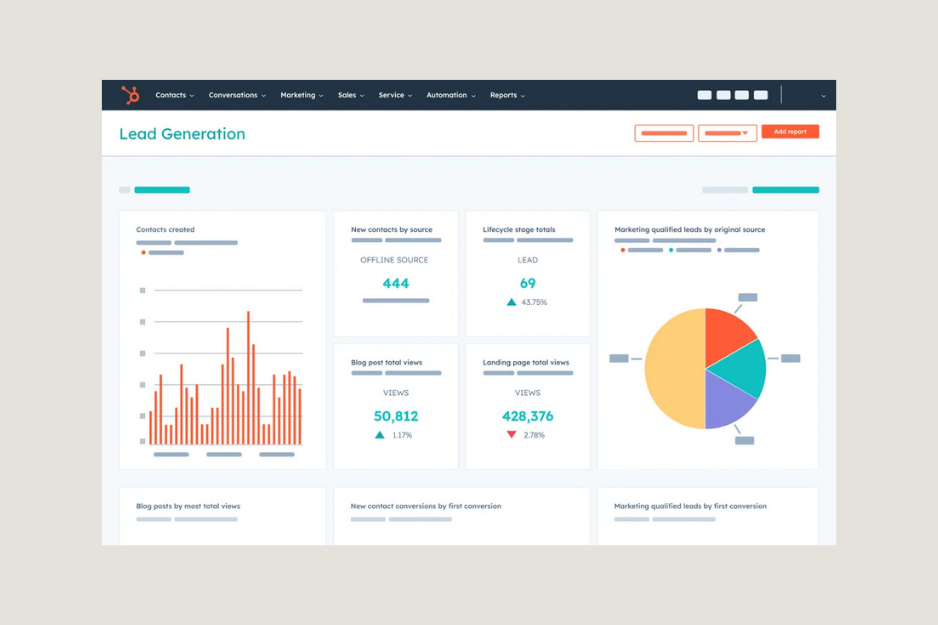
- Reporting & Dashboards: Track sales performance, marketing results, and customer activity in real time.
- CRM Integrations: Connect HubSpot with popular tools like email, calendars, and accounting software.
HubSpot Pricing
| Free: | $0/mo |
| Starter: | $15/mo |
| Professional: | $1,450/mo |
| Enterprise: | $4,700/mo |
HubSpot Pros
- Very easy to use
- Fast on-boarding
- Great platform for small and growing teams
HubSpot Cons
- Limited customization compared to Salesforce
- Advanced features become expensive at scale
Salesforce – All-in-one, Powerful and Highly Customizable
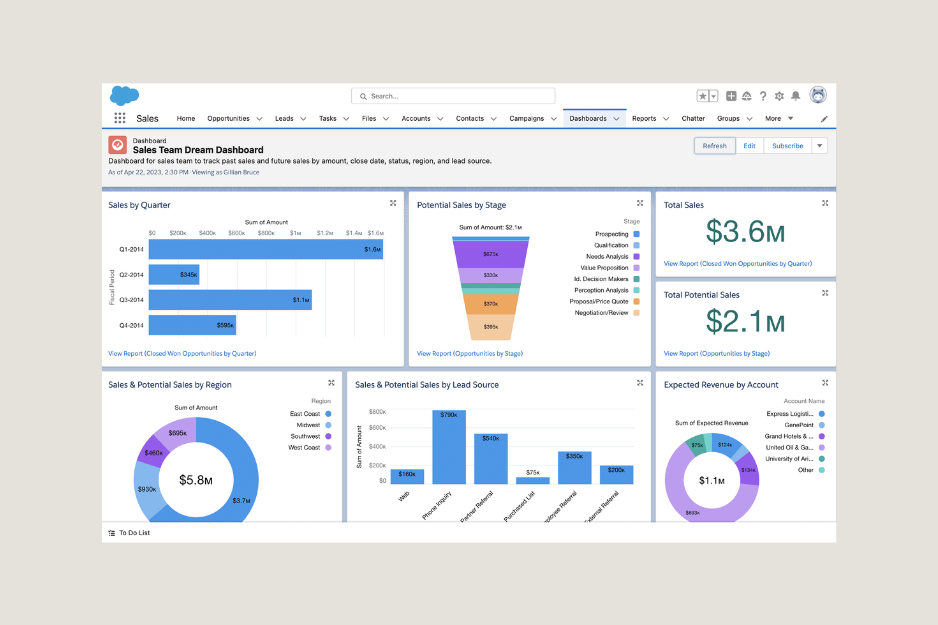
Salesforce is a powerful, enterprise-grade CRM platform built for larger teams and organizations with complex needs. Like HubSpot, it is an all-in-one platform, but with significantly more depth, flexibility, and customization.
Salesforce Notable Features
- Advanced Workflow Automation: Build complex, multi-step automations with detailed logic across sales, service, and operations.
- Powerful Reporting & Analytics: Create advanced dashboards and reports with deep, real-time insights.
- Enterprise Sales Pipeline Management: Manage complex pipelines, territories, and multi-team sales operations.
- Role-Based Access & Permissions: Control data visibility and access across large teams and departments.
- Custom Objects & Fields: Fully customize data structures to match unique business processes.
Salesforce Pricing
| Free Suite: | $0/mo |
| Starter Suite: | $25/mo |
| Pro Suite: | $100/mo |
Salesforce Pros
- Extremely powerful and flexible
- Best-in-class automation and reporting
- Scales well for large organizations
Salesforce Cons
- Steep learning curve
- Complex setup
- Overkill for smaller teams
Final Verdict?
Both HubSpot and Salesforce are all-in-one CRM platforms, but they’re built for very different audiences. HubSpot prioritizes simplicity, speed, and ease of use, while Salesforce prioritizes power, flexibility, and long-term scalability. The right choice depends on your business size, complexity, and available resources.